
maxim ru: такси, доставка
MAXIM.PLATFORM LLCAuto & Vehicles
4.47.00 Reviews
- Version
- 3.17.10
- Installs
- 1.00M
- Age Rating
- Everyone
Screenshots

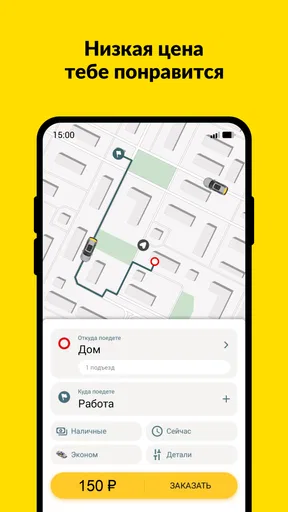
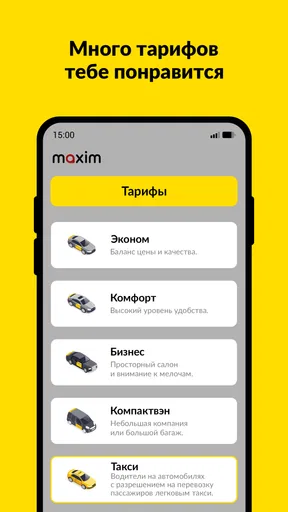
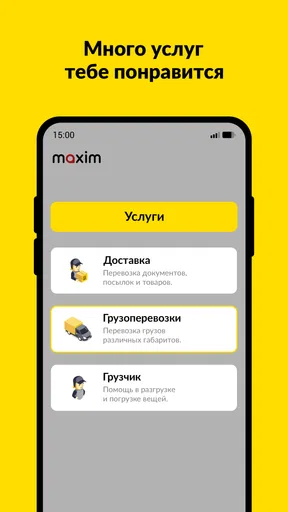
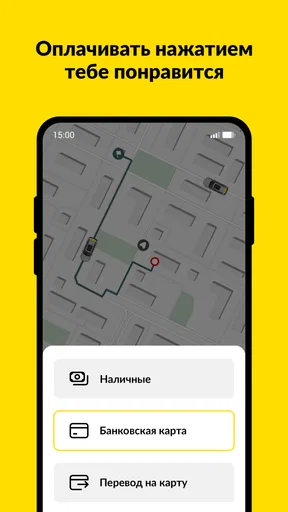
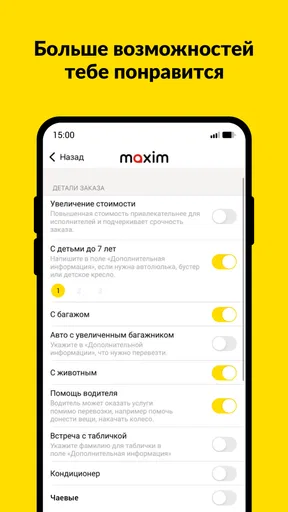
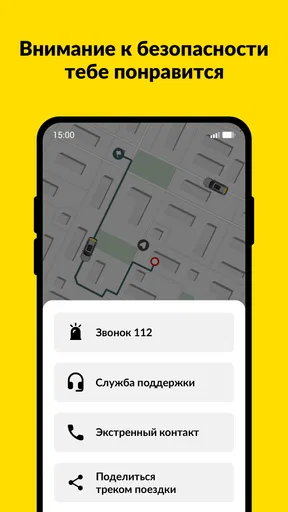

Our Review of maxim ru: такси, доставка
 Analysis by Appyee
When I look at maxim ru: такси, доставка, the feature that stands out most is its attempt to bring several kinds of transport into one practical service: a taxi ride, a delivery request, or freight transportation for a larger load. That matters because these needs often appear on the same busy day. I might need to get across town in the morning, send a package in the afternoon, and arrange transport for something too large for an ordinary car later on. Having one app associated with all three tasks can be more convenient than switching between separate services.
This is a free app in the Auto & Vehicles category, developed by MAXIM.PLATFORM LLC. It is intended for everyone, and the current release is version 3.17.10, compatible with Android 8.1 and later. The service has passed the one-million-install mark and holds a 4.4 average from roughly twelve thousand ratings, which suggests that plenty of people find the basic idea useful even if the experience will naturally depend on the city and the individual request.
One transport app with a broader purpose
I’d begin by looking at how the app’s different transport requests depend on a working connection, since that can shape decisions before a ride or delivery is underway. That perspective also helps me choose sensible moments to check details, especially when I’m moving between places or coordinating with someone receiving an item.
Why the combined approach is useful
Most taxi apps are built around one simple question: where should a driver pick me up, and where should the driver take me? That model works well for a normal trip, but it becomes less helpful when the thing being moved is a parcel, a household item, or freight. Maxim’s broader focus changes the starting point. Instead of treating every request as a passenger journey, it gives the service a role in moving people and goods.
In my view, this is the app’s most meaningful capability. The taxi part is familiar, so the real difference comes from being able to think beyond a seat in a car. A person sending an item across town does not need the same kind of service as someone commuting to work. A business moving supplies needs a different solution again. Bringing these use cases together makes the app more relevant to everyday logistics, not just personal travel.
That does not automatically make it the best choice for every journey. A specialist courier service may be a better fit when a delivery needs highly detailed handling, a carefully defined delivery window, or a business-oriented workflow. Likewise, a dedicated freight provider may be more suitable for unusually heavy or complex loads. Maxim is most appealing when I want a straightforward way to request ordinary transport without building a separate process for each type of job.
What I would use it for first
For a regular passenger ride, I would treat it as an alternative to the usual local taxi apps. For delivery, I would consider it when the item is ready to go and the main challenge is finding transport rather than managing a complicated shipment. For freight, I would first make sure the request matches the kind of vehicle and service available in my area. The app’s broad description is useful, but it should not encourage me to assume that every vehicle can handle every load.
A practical example is moving a boxed appliance from a seller to my home. A normal taxi could be unsuitable because of space, cleanliness, or the risk of damaging the item. A delivery or freight request makes more sense because the purpose of the trip is to move the object, not simply to carry a passenger. I would prepare the package, check its size and weight, describe the pickup and destination clearly, and keep the recipient available so the driver is not left waiting without instructions.
That preparation is one of the less obvious lessons with a multi-purpose transport app: the quality of the result depends heavily on choosing the right service type before confirming anything. If I select a basic ride for a large item, the problem is not necessarily the app itself. It is a mismatch between the request and the vehicle. I would rather spend a moment thinking about what is being moved than discover at pickup that the job cannot be completed comfortably.
How the idea works in a normal day
I find the combined model easiest to understand when I separate the process into three questions. First, am I traveling myself? If so, I need a taxi-style request. Second, is an item traveling without me? Then I need a delivery-oriented request. Third, is the item too large or too numerous for an ordinary car? That points toward freight transportation. This simple distinction prevents the most common mistake: treating every request as the same kind of ride.
For a passenger trip, I would check the pickup point carefully, especially near apartment blocks, markets, stations, or large public buildings. A map pin can be close while still being inconvenient on foot. I would add any useful location detail through the available request process and keep my phone ready in case the driver needs help finding the exact entrance. With taxi apps, a small pickup error can waste more time than the journey itself.
For delivery, I would think like both the sender and the receiver. The sender needs to hand over the correct item in a condition suitable for transport. The receiver needs to know when to expect it and how to identify the delivery. I would use strong packaging, label similar parcels, and avoid sending anything that requires special care unless the service clearly supports that requirement. A delivery request is not a substitute for safe preparation.
For freight, I would be even more precise. I would measure the load, estimate its weight honestly, and consider whether loading or unloading requires extra people or equipment. A vague description such as “a few boxes” may be enough for a small delivery but not for bulky furniture or construction materials. The more accurate the information at the start, the lower the chance of a vehicle mismatch or an awkward conversation at pickup.
A realistic use case: the rushed afternoon
Imagine that I am working from home and receive a message that a small business order is ready for collection. I also need to attend an appointment across town. With separate apps, I might arrange a taxi for myself, contact a courier for the order, and then coordinate two arrival times. With maxim, I can at least begin from the same transport service and decide whether one request or two is more sensible.
I would not assume that combining the tasks is always possible or efficient. If the package is fragile, if the pickup locations are far apart, or if the appointment has a strict start time, separate arrangements may be safer. The benefit is not that one app magically solves every logistical problem. The benefit is that I can evaluate passenger travel and item transport in one place instead of starting from unrelated services.
In this situation, timing becomes more important than the app’s broad range of services. I would arrange the delivery early enough to handle a delay, confirm that someone can receive the item, and avoid building a schedule with no spare time. A transport app can help me request a vehicle, but it cannot remove traffic, loading delays, or an unavailable recipient. The best results come when I use its flexibility without pretending that logistics are perfectly predictable.
Small habits that make the service easier to use
My first practical tip is to save time by preparing location details before requesting a vehicle. For a home pickup, I would know the entrance, floor, and any access issue that could confuse a driver. For a business, I would identify the loading point rather than simply entering the company’s street address. This is especially valuable for delivery and freight, where the driver may need to stop close to a specific door.
My second tip is to photograph or note the condition of an item before handing it over, particularly when the package is valuable or easy to confuse with another parcel. This is not a replacement for any formal support process, but it gives me a clear personal record of what I sent. I would also make sure the receiver knows what is coming and avoid relying on a last-minute message after the vehicle has already arrived.
My third tip is to choose the service based on the object’s practical shape, not only its weight. A long, awkward item can be difficult to transport even when it is light. Several small boxes may need more usable space than one compact heavy package. Thinking about dimensions, stacking, protection, and access gives a more realistic picture than focusing on a single number.
For passenger trips, I would use the same principle in reverse: do not request a freight-style solution for a simple ride unless the circumstances genuinely require it. The app’s range is helpful, but extra capability can also create unnecessary decisions. When I only need to get from one address to another, the simplest suitable request is usually the best one.
Where the experience can feel less smooth
The main trade-off is breadth. An app that covers taxis, delivery, and freight has to serve very different situations, and that can make the experience feel less focused than a dedicated taxi application. A user who only wants a quick ride may prefer an interface built entirely around pickup and destination. Someone who frequently ships business goods may want more specialized tools and clearer logistics controls.
There is also a responsibility on the user to describe the request accurately. With a basic taxi journey, an incorrect detail may be corrected quickly. With a bulky item or a delivery, the same mistake can affect the vehicle, loading process, recipient, and schedule. I would not use the app casually for an unusual load without first thinking through what the driver will need to do.
Availability is another practical consideration. Transport services are local by nature, so the usefulness of the taxi, delivery, or freight option can vary between cities and even between neighborhoods. I would check what is offered for my route before planning an important delivery around it. For a time-critical shipment, I would keep a backup plan rather than assuming that a broad service category guarantees an immediate suitable vehicle.
Support expectations also need to be realistic. A ride, a parcel, and a freight load can each create different problems. A passenger may be concerned about pickup, a sender about handover, and a freight customer about loading or damage. I would keep the request details and communication clear so that any issue can be explained without guesswork. Good preparation does not eliminate problems, but it makes them easier to resolve.
How it compares with familiar alternatives
Compared with a traditional taxi company, maxim offers a more modern way to request transport and extends the idea beyond passenger rides. A phone call to a local dispatcher may still be preferable for a person who wants human assistance or has an unusual accessibility need. For a routine trip, though, an app-based request is generally more convenient because I can enter the journey myself and keep the details in one digital workflow.
Compared with a taxi-only app, the advantage is clear when I sometimes need delivery or freight. I do not need to learn a completely different service for every transport problem. The compromise is that the interface and process may not feel as specialized as a service dedicated to only one task. If my entire day consists of ordinary rides, a focused taxi alternative could feel simpler.
Compared with a courier company, maxim appears better suited to flexible, everyday movement than to a highly structured shipping operation. I would consider a specialist courier for sensitive documents, repeated commercial dispatches, formal tracking requirements, or shipments that need carefully defined handling. I would consider maxim when the job is more immediate and local, and when I mainly need a vehicle to move a person or item from one place to another.
Compared with arranging freight directly, the app may reduce the effort of finding transport for a smaller job. However, direct freight arrangements can be stronger when I need a particular vehicle, scheduled loading, multiple stops, or coordinated labor. The decision comes down to complexity. Maxim is attractive when the task is understandable and manageable; a specialist becomes more valuable as the number of constraints grows.
Who benefits most from the wider service
I think the strongest audience is people who deal with changing transport needs. A small shop owner may need to move stock one day and send a customer order the next. A renter may need a taxi today and help moving boxes tomorrow. A household preparing for a renovation may occasionally need freight transportation without wanting a permanent relationship with a haulage company.
It can also suit people who prefer one familiar app for different errands. Once I understand the difference between a passenger ride, a delivery, and a freight request, the broader service becomes easier to plan around. That convenience is more valuable than a long list of features because it reduces the number of separate services I need to remember.
I would be more cautious about recommending it to someone whose needs are highly specialized. If I require guaranteed handling for delicate goods, a precise commercial workflow, or a complex move involving several stages, I would look at a dedicated provider first. I would also hesitate to make it my only option for an appointment that cannot tolerate delay. Flexibility is useful, but reliability for a specific high-stakes task may matter more than convenience.
What the rating and cost suggest
The app is free to install and use as an entry point, which makes it easy to test for an occasional ride or delivery without committing to a subscription. Its 4.4 average across about twelve thousand ratings gives it a solid public reception, while more than a million installs show that the service has reached a substantial audience. I see those figures as encouragement to try it, not as a promise that every city, route, or request will feel identical.
The developer, MAXIM.PLATFORM LLC, presents the product as a transport platform rather than a single-purpose taxi tool. That positioning matches my experience of the concept: the useful question is not simply whether it can take me somewhere, but whether it can help me decide how a person or an item should get there. The app is available to everyone and supports Android 8.1 or later, so compatibility should be comfortable for many older devices as well as newer ones.
I would still judge the service after trying the exact task I care about. A passenger should test a normal local ride. A sender should begin with a straightforward, well-packed item. A business should try a modest delivery before depending on the service for a demanding schedule. This staged approach is more sensible than assuming that success in one category automatically proves suitability in another.
My recommendation after looking at the whole workflow
What I like most about maxim ru: такси, доставка is the practical bridge between personal travel and local logistics. Taxi rides, deliveries, and freight transportation are different jobs, but they often appear in the same real-life routine. The app’s value comes from giving me one place to think through those jobs and request the type of transport that matches them.
Its best use is a clear, local task where I can describe the pickup, destination, passenger or item, and timing without ambiguity. I would prepare packages properly, give accurate information about bulky loads, and leave room for traffic or loading delays. Those habits are not glamorous, but they make the difference between a smooth request and an avoidable failure.
My final view is positive, with a clear boundary: I would recommend it to someone who wants flexible everyday transport and occasionally needs more than a passenger ride. I would not present it as a universal replacement for specialist couriers, dedicated freight companies, or a focused taxi app. Used for the right level of complexity, its broader capability is genuinely useful. Used for a highly sensitive or tightly scheduled job, I would compare alternatives before relying on it.
Verdict
Strengths of maxim ru: такси, доставка
- Quick taxi booking with clear pickup and destination details.
- Supports food and package delivery in addition to rides.
- Real-time driver tracking helps estimate arrival times.
- Convenient in-app payment options reduce the need for cash.
- Ride history makes it easy to repeat frequent trips.
Limitations of maxim ru: такси, доставка
- Service availability and vehicle choice vary by city.
- Prices may increase during busy periods or high demand.
- Some features require location access and other permissions.
- Delivery times can change because of traffic or courier delays.
- Support response times may vary when resolving trip issues.
Similar Picks in This Category
View All
Android Auto
Google LLC4.1

maxim — order a taxi & food
PT. SITO4.7

Штрафы ГИБДД: проверка с фото
Pays LLC – Штрафы ГИБДД4.7

Номерограм – проверка авто
Авто Ассист4.8

Дром Авто
Дром4.9

Frequently Asked Questions
What is Maxim ru: Такси, доставка, and what services does it offer?
Maxim ru: Такси, доставка is a mobile service that combines taxi booking with delivery options. From the app, users can request a ride, choose available vehicle or service categories, estimate the fare, and arrange delivery of packages or goods where supported. The exact services, prices, and availability may differ depending on the city and local operating conditions.
How do I order a taxi through Maxim ru, and can I see the price beforehand?
To request a taxi, enter your pickup point and destination, check the available service options, and confirm the order in the app. Maxim generally displays an estimated or fixed fare before confirmation, although the final amount may vary because of route changes, waiting time, traffic, extra stops, or local pricing rules. Reviewing the order details carefully before booking is recommended.
Can I use Maxim ru for parcel and food delivery?
The delivery features depend on the location where you use the application. In supported areas, Maxim may allow users to send parcels, documents, personal belongings, or selected goods by entering pickup and recipient details. Some cities may also offer food or shopping delivery. Before placing an order, check which delivery categories, size limits, payment methods, and service conditions are available locally.
What payment methods and safety features are available in the Maxim app?
Payment options can vary by country and city, but the app may support cash, bank cards, or other local methods. Users can usually review driver and vehicle information, follow the trip status, and share ride details when those functions are available. For safety, confirm that the vehicle and driver match the information shown in the order before starting the journey.
Is Maxim ru: Такси, доставка available everywhere, and what should I check before downloading it?
Maxim operates only in selected regions, so availability should be confirmed in your city before downloading or registering. You should also check whether the app supports your preferred language, payment method, taxi categories, and delivery services. Because fares and operating rules are local, reading the current store description, permissions, privacy terms, and user reviews can help you decide whether it meets your needs.
